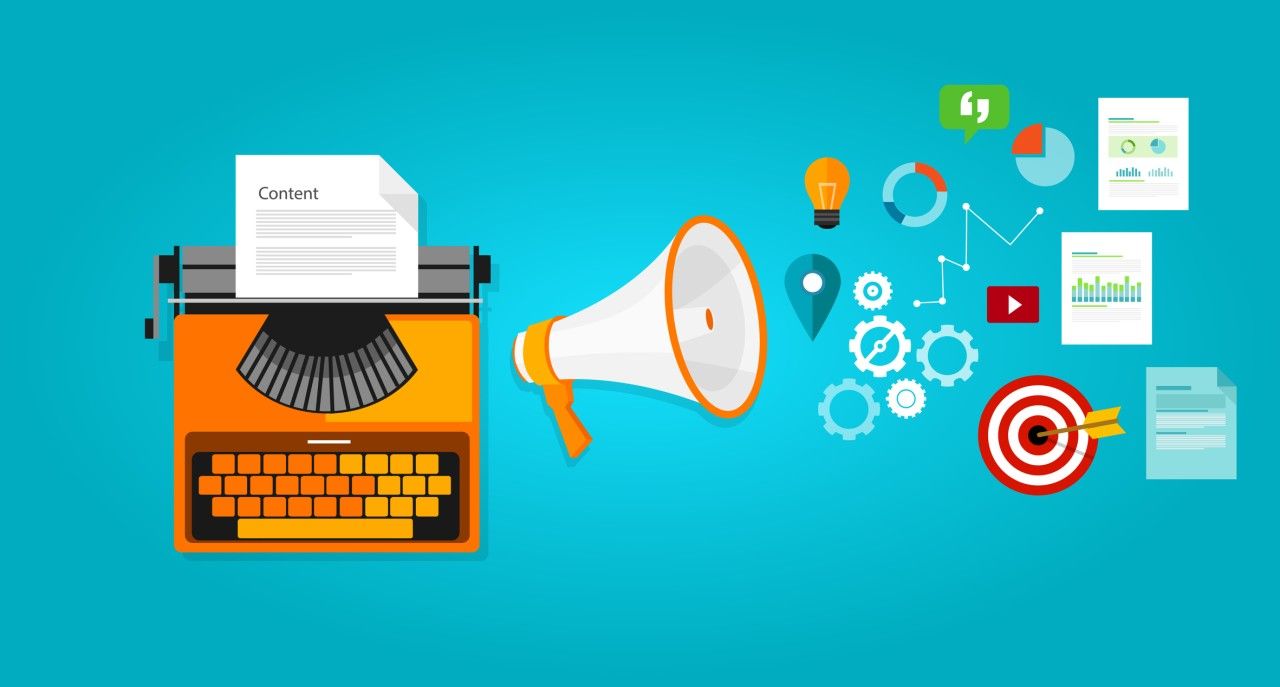

Squeeze Every Drop: How to Repurpose Content for Maximum Impact

Single Media

In the world of content marketing, creating high-quality content takes time, effort, and resources. But what if you could squeeze every last drop of value from your existing content? That's where the magic of content repurposing comes in!

Repurposing content is like giving your content a new lease on life. It's about taking your existing assets – blog posts, webinars, ebooks, etc. – and transforming them into different formats to reach new audiences and maximize your impact across both marketing and sales channels.

Think of it like this: a blockbuster movie starts in theaters, then moves to DVD, then streaming services, and maybe even cable TV. Each stage brings in a new audience and extends the life of the film. Your content can follow a similar journey!

Here's how to get started with content repurposing:

1. Identify Your Most Valuable Content:

Start by digging into your analytics. Which blog posts get the most traffic? Which webinars have the highest attendance rates? Which pieces resonate most with your target audience? These high-performing pieces are prime candidates for repurposing.

2. Choose the Right Formats (for Marketing AND Sales):

Consider your target audience and the platforms they frequent. A blog post can be turned into:

Marketing Channels:

Social media posts: Share key takeaways, quotes, or visuals on Twitter, LinkedIn, Facebook, and Instagram.

Infographics: Transform data and complex information into easily digestible visuals.

Videos: Create short animated explainers or record a quick video summarizing the main points.

Email newsletters: Include snippets or summaries in your newsletters to drive traffic back to the original content.

Ebooks and guides: Combine related blog posts into a comprehensive ebook or guide.

Sales Enablement:

One-pagers: Condense valuable information into concise, sales-ready documents.

Presentations: Repurpose webinar content or blog posts into compelling sales presentations.

Scripts and talking points: Equip your sales team with persuasive language and key takeaways.

Case studies: Transform customer success stories into powerful sales tools.

Product demos: Incorporate blog post content or webinar highlights into product demonstrations.

3. Give it a Fresh Spin:

Don't just duplicate your content. Add value with each repurposing effort:

Update information: Refresh statistics, examples, and data.

Change the angle: Approach the topic from a new perspective or focus on a specific aspect.

Use a different tone: Adapt the language and style to suit the new format and platform (or target audience).

More Examples of Content Repurposing in Action:

Webinar magic: Turn your webinar recording into a series of short video clips for social media, a blog post summarizing key takeaways for your website, and a concise presentation for your sales team.

Gated content strategy: Offer valuable content like ebooks or webinars behind a registration form for a limited time. This allows you to generate leads and build your email list. Later, release the content to the public for broader reach and use it to equip your sales team.

Customer testimonials: Repurpose positive customer reviews into social media posts, website testimonials, case studies for your sales team, and even short video snippets.

Yo Marketing Can Help!

Feeling overwhelmed by the possibilities? Yo Marketing can help you develop a content repurposing strategy that aligns with your marketing and sales goals, maximizing your content's impact across the board. We'll help you:

Audit your existing content: Identify your most valuable assets.

Develop a repurposing plan: Choose the right formats and channels for your target audience.

Create high-quality repurposed content: Ensure your content is engaging and effective.

Track your results: Measure the impact of your repurposing efforts and refine your strategy over time.

Ready to get more mileage from your content? Schedule a strategy call today!

Schedule a free strategy session today


Relevant Posts
All Blog Posts
Blog

Why 2025 Belongs to Customer Marketing

By Sarah Taylor, Yo Marketing Agency Head of Global Events As we head deeper into 2025, a quiet shift is reshaping the way marketing teams operate. It’s not about flashy lead gen tactics or ever-larger acquisition funnels anymore. The most forward-thinking businesses are asking a different question: How do we get more value from the customers we already have? ### Budget Cuts and Strategic Shifts With many marketing budgets under pressure, companies are re-evaluating how and where they invest. For a long time, growth was synonymous with acquiring net-new leads. But in today’s landscape, where CAC (customer acquisition cost) is climbing and conversion timelines are stretching, executives are doubling down on a more efficient path to growth: customer marketing. In fact, while many demand gen roles are being frozen or cut, there’s been a noticeable uptick in investment for customer advocacy, lifecycle marketing, and community-led programmes. These aren’t just tactical roles; they’re becoming the backbone of a more sustainable growth strategy. ### It’s More Than Just Upselling Let’s be clear: this isn’t about squeezing more revenue out of existing clients. The shift is much bigger than that. It’s about: • Creating genuine brand advocates • Showcasing customer success as proof of value • Building deeper loyalty that leads to repeat business and referrals Customer marketers are becoming the storytellers of the business, spotlighting real-world results, amplifying trusted voices, and helping prospects see what’s possible through the lens of existing success. ### Advocacy Over Acquisition When done right, your happiest customers become your most powerful marketing channel. They bring credibility, reduce sales cycles, and build trust in a way no campaign or cold call ever could. And the beauty is, you’ve already done the hard part – they chose you. Now it’s about nurturing those relationships and building a platform for them to tell their story. In 2025, the smartest marketers aren’t chasing attention. They’re earning trust. If you’re ready to turn your customers into your most valuable marketing asset, Yo Marketing can help. We design and deliver customer-led programmes that build loyalty, drive referrals, and create stories that sell. Let’s talk! [![Schedule a free strategy session today](https://8pfraw1pqsd9gr2m.public.blob.vercel-storage.com/cta/schedule%20a%20free%20strategy%20session%20today-71nxI8IjipsNWn5HZlezFcxibVvXHd.png)](/contact/)

Icon

Read more

Blog

Unlock B2B Growth: The Power and Strategy of Account-Based Marketing

By Nick Veneris, Yo Marketing Agency Director of Digital Strategy & Growth In the competitive landscape of B2B, finding efficient ways to drive significant growth is paramount. While broad marketing strategies have their place, Account-Based Marketing (ABM) is emerging as a powerhouse for companies targeting high-value clients. It’s not just a buzzword; it's a strategic approach proven to deliver substantial results. In fact, [87% of B2B marketers report that ABM outperforms](https://www.terminus.com/state-of-abm-report/) other strategies in ROI, and companies using ABM can generate 208% more revenue for their marketing efforts. This post dives into why ABM is a game-changer for B2B companies, exploring its core benefits, strategic goals, effective strategies, and how to approach implementation. #### What Exactly is Account-Based Marketing? At its heart, ABM is a highly focused B2B strategy where marketing and sales teams collaborate closely. Instead of casting a wide net hoping to catch leads, ABM identifies specific high-value companies (accounts) that are the best fit for your products or services. Resources are then concentrated on engaging these target accounts with personalized campaigns tailored directly to their unique needs, challenges, and position in the buying journey. It’s about quality over quantity, depth over breadth. #### The Compelling Benefits of ABM for B2B Companies Why are so many B2B growth teams prioritizing ABM? The advantages are clear and impactful: **1. Superior ROI and Revenue Generation:** As highlighted, ABM consistently delivers higher returns compared to other marketing strategies. Focusing resources on accounts most likely to close drives significant revenue growth. **2. Increased Precision and Efficiency:** ABM eliminates wasted spend on audiences who aren't a good fit. By concentrating efforts on predefined high-value accounts, marketing resources are used far more effectively. **3. Enhanced Customer Lifetime Value:** ABM isn't just about acquisition; it's about building deep relationships. This focus leads to better engagement and significantly higher customer retention rates (companies using ABM see a 36% higher rate). **4. Faster Sales Cycles:** Personalized engagement and sales/marketing alignment mean target accounts move through the pipeline more quickly. ABM users report a 27% faster deal cycle. **5. Improved Sales and Marketing Alignment:** ABM necessitates collaboration. Both teams must agree on target accounts, develop messaging, and coordinate outreach, leading to a unified approach and more qualified opportunities handed to sales. **6. Deeper Account Penetration:** ABM allows you to map out and engage multiple stakeholders within a target account, increasing the chances of closing complex B2B deals. **7. Real-World Results:** The strategic focus of ABM isn't just theoretical; it translates into measurable business impact. By concentrating resources on high-value accounts and delivering personalized engagement, companies consistently see improvements in pipeline velocity, deal size, and overall revenue contribution from their most important clients. To see a tangible example of how a well-executed ABM strategy can yield significant outcomes, [read our case study](https://yomarketing.agency/blogs/case-study-yo-marketing-drives-pipeline-growth-for-workforce-analytics-platform-with-strategic/). This provides concrete proof of ABM's effectiveness in driving real growth. #### Key Goals Driving ABM Strategies Companies adopt ABM to achieve specific, high-impact business objectives: **Land High-Value Enterprise Deals:** Focusing resources on the biggest opportunities. **Increase Average Deal Size:** By understanding account needs deeply and cross-selling/up-selling effectively. **Improve Pipeline Velocity:** Moving key accounts from identification to close more quickly. **Build Strong, Lasting Client Relationships:** Turning key accounts into long-term partners. **Enhance Sales & Marketing Synergy:** Creating a seamless, collaborative GTM motion. **Boost Revenue from Target Accounts:** Directly attributing marketing efforts to closed business within the most important segments. #### Core ABM Strategies & How to Approach Implementation Getting started with ABM involves a structured approach: **1. Identify Your Ideal Customer Profile (ICP):** Analyze your best existing customers. What industries, company sizes, technologies used, or pain points do they share? Define what an ideal target account looks like. **2. Select Target Accounts:** Build a focused list of companies that fit your ICP. Use firmographic data (industry, size, location), technographic data (technologies they use), and intent data (signals indicating they are researching solutions like yours). Keep the list manageable and focused. **3. Research and Personalize:** Deeply understand the selected accounts. Identify key stakeholders, business challenges, and strategic goals. Map out the buying committee. **4. Create Tailored Content & Messaging:** Develop marketing assets (emails, case studies, presentations, ad creatives) that speak directly to the specific needs, industry, or personas within each target account. Generic messaging won't work. **5. Orchestrate Multi-Channel Engagement:** Coordinate outreach across various touchpoints. This includes personalized emails, targeted digital advertising (like LinkedIn ads), social media engagement, direct mail (if appropriate), and coordinated sales outreach. **6. Align Sales and Marketing Activities:** Constant communication is key. Ensure both teams know the engagement plan, share insights, and work together on follow-up. **7. Measure, Analyze, and Optimize:** Track progress based on ABM-specific metrics. Focus on account engagement levels, pipeline influence (how many target accounts enter the sales pipeline), deal velocity, and ultimately, revenue generated from the target account list. Use insights to refine your approach. Implementing these steps requires a practical mindset focused on consistent effort rather than quick fixes. For a deeper look into crafting a realistic and effective plan, explore [Forget Magic Bullets: The Real ABM Strategy for B2B Success](https://yomarketing.agency/blogs/forget-magic-bullets-the-real-abm-strategy-for-b2b-success/). #### Measuring What Matters in ABM Success in ABM isn't measured by vanity metrics like clicks or impressions. Instead, focus on business impact: Pipeline contribution from target accounts Account engagement scores Deal velocity for target accounts Closed revenue from the ABM list Customer retention rates for ABM accounts #### Final Thoughts: ABM for Focused B2B Growth ABM is a powerful strategic choice for B2B organizations aiming to secure high-value deals, cultivate long-term customer relationships, and ensure their sales and marketing efforts are perfectly synchronized and maximally efficient. If your business involves complex sales cycles, high-ticket solutions, or a desire to deepen relationships with key clients, integrating ABM is no longer optional—it's essential for sustained growth. [![Schedule a free strategy session today](https://8pfraw1pqsd9gr2m.public.blob.vercel-storage.com/cta/schedule%20a%20free%20strategy%20session%20today-71nxI8IjipsNWn5HZlezFcxibVvXHd.png)](/contact/)

Icon

Read more